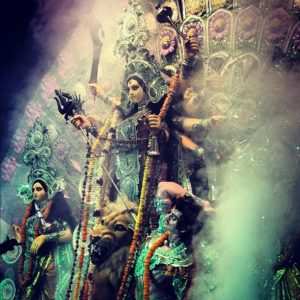
The Chandipath is divided into three sections - charitras - each being equivalent to one of the three Veda-s: Rig, Sama, Yajur. The 3rd Charitra is the domain of Maharasraswati, and has given rise to some of the greatest theological and metaphorical interpretations of Shakta doctrine. The Bija of this section is Klim, which is…
As he saw the army being slaughtered, Ciksura, the great asura general went ahead in tremendous fury to battle Ambika. He rained showers of arrow on the Devi just as clouds shower the summit of Mount Meru. But easily shattering those volley of arrows, the Devi, in turn, killed Ciksura's horses and charioteer. Like lightning…
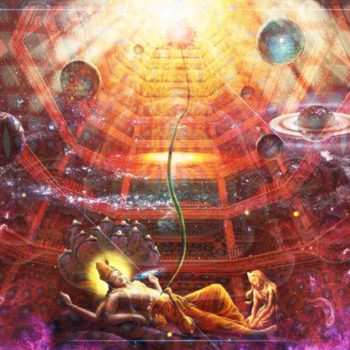
One of the most beautiful sections of the #Caṇḍī Pāṭha is the stuti to the Devi done by Brahma, so that Vishnu can fight with the Asura-pair named Madhu and Kaitabha.
The names Madhu and Kaitabh most easily remind us of madhu - honey, and a play on the word kITa - insect, a…
[Note: This article was first published in IndiaFacts]
Every year during the second fortnight of the lunar month of Bhardrapada, right after the Ganesha puja, a period of 14 days is set aside for offering reverence to ancestors, known as pitrpaksha. During this time, many traditional Hindus perform pitr tarpana, pitr shraddha, and pinda danaeither at home, or preferably near…
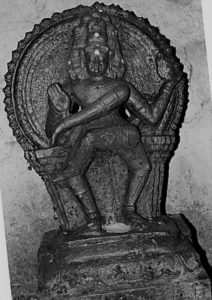
One of the lesser known gods in the Saiva pantheon is called Jvaradeva - god of fever. He is depicted as three-armed, three-legged and when he would attack an individual their body temperature would increase to uncomfortable levels. Later on jvara deva was paired with Sitala or goddess of smallpox. The story of his origin…
śhrī bhagavān uvācha
bahūni me vyatītāni janmāni tava chārjuna
tānyahaṁ veda sarvāṇi na tvaṁ vettha parantapa
ajo ’pi sannavyayātmā bhūtānām īśhvaro ’pi san
prakṛitiṁ svām adhiṣhṭhāya sambhavāmyātma-māyayā
yadā yadā hi dharmasya glānir bhavati bhārata
abhyutthānam adharmasya tadātmānaṁ sṛijāmyaham
paritrāṇāya sādhūnāṁ vināśhāya cha duṣhkṛitām
dharma-sansthāpanārthāya sambhavāmi yuge yuge
janma karma cha me divyam evaṁ yo vetti tattvataḥ
tyaktvā dehaṁ punar janma naiti mām eti so ’rjuna
vīta-rāga-bhaya-krodhā…
Men vary in capacity, temperament, knowledge and general advancement, and therefore the means (for Sadhana also means instrument) by which they are to be led to enlightenment must vary. Methods which are suitable for highly advanced men will fail as regards the ignorant and undeveloped for they cannot understand them. What suits the latter has…
The episode in the Bhagwatam where Sri Krshna subdues Kaliya is of tremendous spiritual importance in the sadhana of Vaishnavism. While there is a historical significance to the stories, for a sadhaka the spiritual metaphors in each of these stories are of greater importance in the fullfilment of sadhana. Yamuna is the river of Bhakti…
The modern text of the Chandipath that comes to us is an aggregate of various stotras and parts which were added over time, around the core of the 13 main chapters and which are helpful for sadhana. At the very end of the text we have the Siddha Kunjika Stotram which is often regarded as…
The japa is usually successful only on one of two conditions – if it is repeated with a sense of its significance, a dwelling of something in the mind on the nature, power, beauty, attraction of the Godhead it signifies and is to bring into the consciousness, – that is the mental way; or if…
I have not said that a Guru is not necessary. But a Guru need not always be in human form. First a person thinks that he is inferior and that there is a superior, all-knowing, all powerful God who controls his own and the world’s destiny and worships him or does bhakti. When he reaches a certain stage and becomes…
Manimohan Goswami was a young man during the rule of British India, born in Bangladesh, and like many others of that era, took to armed revolution as a means of overthrowing the foreign rulers. Manimohan had a spiritual inclination from childhood, having been intiated into some mantra in a dream when he was a kid,…